Prevent Muscle Loss: Simple Strength, Protein & Recovery

Muscle Loss Prevention Basics Made Simple: A Practical Guide to Protecting Strength Over Time
Muscle loss can creep in during busy seasons, long layoffs from training, aging, dieting, or high stress. The good news: preventing it is mostly about consistent strength work, enough protein and calories, smart recovery, and a few simple habits that keep progress steady year after year. With a few “non-negotiables” in place, it’s possible to maintain strength through travel, hectic work weeks, and even long winters when motivation runs low.
What muscle loss looks like (and what it isn’t)
After a short break, many people notice they look a little “softer.” Often, that’s not true muscle tissue loss—it’s changes in glycogen (stored carbs) and water. When training volume drops or carbs decrease, muscles can look less full even if the actual muscle fibers haven’t changed much.
True muscle loss typically shows up in more measurable ways: declining strength on familiar lifts, shrinking measurements over multiple weeks, reduced training performance (fewer reps with the same weight), and reduced balance, power, or “snap” in everyday movements. Common triggers include prolonged inactivity, aggressive calorie deficits, low protein intake, chronic poor sleep, illness/injury, and unmanaged stress.
Aging-related muscle decline is real, but lifestyle has a major influence. Regular resistance training and adequate protein intake can meaningfully slow age-related losses and help maintain independence and athleticism over time. For baseline guidance on activity targets, see the Physical Activity Guidelines for Americans.
The 4 pillars that protect strength over time
Muscle retention works best when a few simple inputs stay consistent. Think of these pillars as a checklist: if one slips for a week, the others can help “hold the line” until life normalizes again.
| Pillar | Minimum effective target | Simple way to start this week |
|---|---|---|
| Strength training | 2–3 full-body sessions/week | Pick 4 moves: squat/hinge/push/pull; do 2–3 sets each |
| Protein | Spread protein across 3–4 meals | Add a protein anchor at breakfast (eggs, yogurt, tofu, whey) |
| Recovery | 7–9 hours sleep most nights | Set a consistent wake time; reduce late caffeine/alcohol |
| Daily movement | Regular walking + light mobility | 10-minute walk after 1–2 meals; 5 minutes stretching |
If you want a deeper dive on aging, strength, and staying capable, the National Institute on Aging has practical, plain-language resources.
Strength training that keeps muscle: keep it simple, keep it heavy enough
The body keeps muscle when it has a reason to. Strength training is that reason—the clearest “signal” that muscle is still needed. You don’t need complicated programming; you need repeatable work that gradually challenges you.
Protein, calories, and the “dieting without losing muscle” rules
For evidence-based protein guidance, see the International Society of Sports Nutrition position stand on protein and exercise.
Simple protein plan by goal (quick guide)
| Goal | What to prioritize | Practical meal pattern |
|---|---|---|
| Maintain muscle during busy life | Consistent training + protein at each meal | 3 meals with protein + 1 protein snack |
| Lose fat while keeping strength | Moderate deficit + higher protein | 3–4 protein-forward meals; keep workouts intense |
| Regain after a layoff | Training frequency + adequate calories | Add one extra protein serving daily for 2–4 weeks |
Recovery habits that prevent backsliding
When life gets in the way: the “minimum effective dose” plan
Two-day maintenance workout (example template)
| Day | Main moves | Sets x reps (guide) |
|---|---|---|
| Day A | Squat pattern + Row + Carry | 2–3 x 5–10 each |
| Day B | Hinge pattern + Press + Core | 2–3 x 5–10 each |
A practical resource for staying consistent
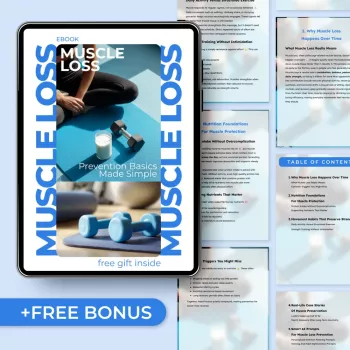
If a step-by-step structure helps keep the basics easy to follow, consider Muscle Loss Prevention Basics Made Simple: A Practical Guide to Protecting Strength Over Time. It’s built for repeatability—useful for avoiding common mistakes during breaks and setting straightforward targets for training, protein, and recovery.
Consistency improves when tracking stays simple: workouts completed, daily protein “hits,” and weekly movement goals. For extra support with day-to-day routines (like building a closet that makes it easier to get out the door), Wear What Works Together – Color Matching Guide for Outfits, Personal Style, and Confident Everyday Dressing can help reduce friction in your schedule. If cold weather keeps you from walking, an outdoor-ready layer like the Elegant V-Neck Short Winter Coat for Women can make daily movement more realistic during winter months.
FAQ
How quickly does muscle loss happen if training stops?
Measurable drops in strength and performance can begin within a few weeks of complete inactivity, though the timeline varies by training history, diet, and daily movement. Some early “size” changes are often glycogen and water, not pure muscle tissue. Even small amounts of strength work can slow losses dramatically.
Is protein more important than lifting weights for preventing muscle loss?
Both matter, but resistance training is the primary signal that tells your body to keep muscle. Protein supports repair and helps you retain muscle more effectively when you are training. Without training, protein alone usually can’t fully prevent muscle loss over time.
Can walking replace resistance training for muscle maintenance?
Walking is excellent for health and helps reduce inactive days, but it typically doesn’t provide enough loading to maintain muscle and strength on its own. Pair regular walking with 2–3 short strength sessions per week for better long-term results.











Leave a comment