Quit Social Media: 7-Day Reset for Focus (Download)
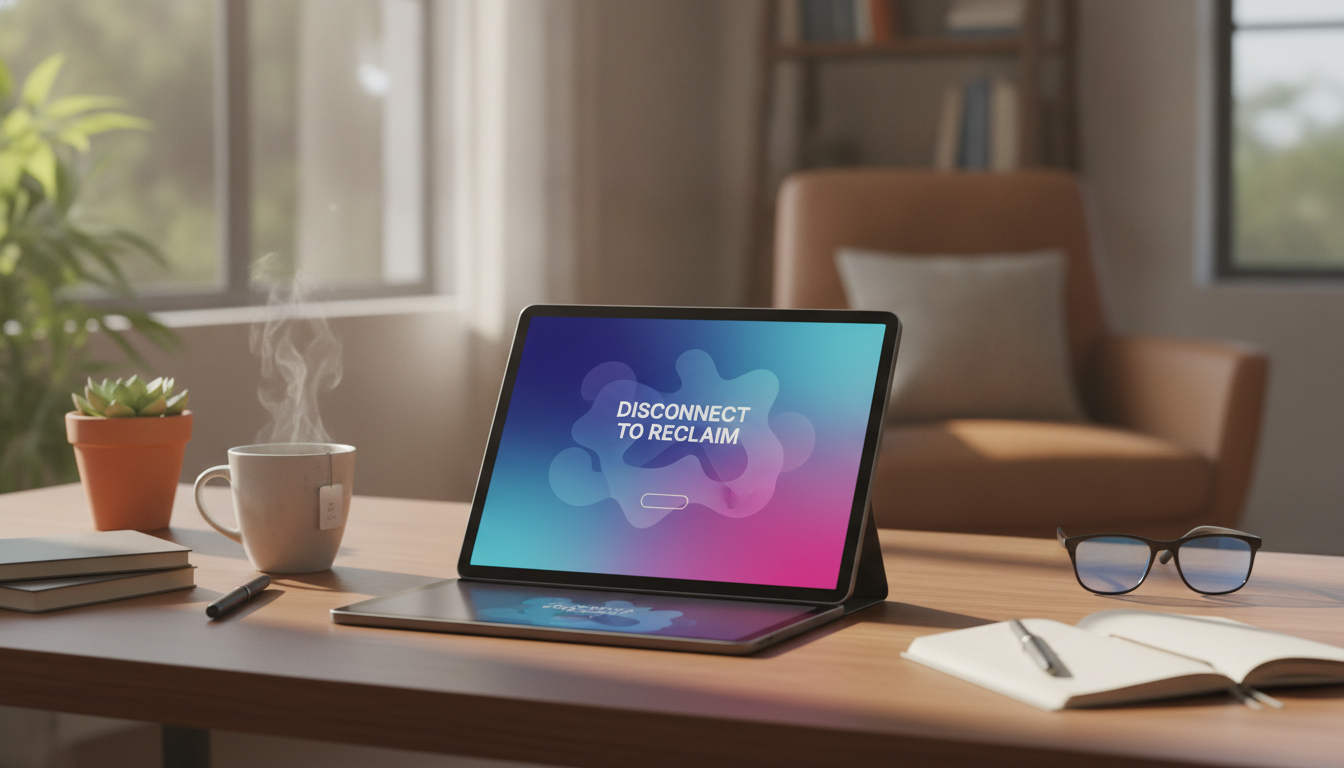
Disconnect to Reclaim: A Practical Guide to Quitting Social Media for Mental Clarity and Focus (Digital Download)
Constant checking, endless scrolling, and “just one more minute” can quietly drain attention and mood. Disconnect to Reclaim: A Practical Guide to Quitting Social Media – Digital Download for Mental Clarity and Focus is built for a clean, practical break from social platforms—without vague advice—so daily focus feels easier to access and mental space starts to return.
Social media can be useful, but the always-on design makes it easy to overconsume. If you’re noticing more mental clutter, shorter attention, or a background sense of restlessness, a structured reset can help you rebuild your default settings—one decision at a time. For a research-informed view on why this matters, see the American Psychological Association (APA) overview on social media and mental health.
What changes when social media stops running the day
- More uninterrupted attention: fewer micro-distractions that fragment work, reading, and conversations.
- Lower mental noise: less comparison, outrage cycles, and constant context switching.
- Better emotional recovery time: fewer rapid swings from notifications and algorithm-driven content.
- More intentional connection: replacing passive feed time with direct messages, calls, or in-person plans.
- Clearer priorities: discovering what actually feels meaningful when default scrolling is removed.
Many people notice that their mind feels “quieter” within days—especially when notifications are reduced. Deeper benefits often come when the empty moments (waiting in line, bedtime, in-between tasks) are intentionally refilled with something that supports your life rather than hijacks it.
Who this guide fits best
- Anyone who opens apps automatically (thumb-to-icon muscle memory) and wants that pattern to stop.
- Students and knowledge workers who need deeper focus blocks without constant checking.
- Creators and entrepreneurs who want healthier boundaries while keeping necessary online presence.
- People feeling mentally “full” but not satisfied—busy online, yet behind on real priorities.
- Anyone planning a short reset (7–30 days) or a longer, lifestyle-level change.
What’s inside the digital download
- A step-by-step plan that turns quitting into small, doable moves instead of a single willpower decision.
- Simple prompts to identify triggers (boredom, stress, loneliness, avoidance) and swap in better defaults.
- Boundary templates for app access, notification settings, and “office hours” for necessary use.
- A relapse plan that treats slip-ups as data—not failure—so momentum isn’t lost.
- A focus-friendly routine framework to fill the space with restorative, high-value activities.
If you want a ready-to-use format (not a philosophy lecture), this is designed to be saved to a device or printed so you can actually follow it when the urge to check hits.
A practical 7-day reset you can start immediately
- Day 1: Audit and intent — write down what social media gives (and costs), then choose a clear goal (pause, reduce, or quit).
- Day 2: Environment cleanup — remove app shortcuts, log out, disable non-essential notifications, and set friction (password manager, app limits).
- Day 3: Replace the habit loop — pick two “replacement defaults” for the moments you usually scroll (walk, stretch, quick tidy, journal, water).
- Day 4: Reclaim attention — schedule one 60–90 minute deep-focus block and protect it with phone out of reach.
- Day 5: Connection on purpose — message or call one person directly; plan an offline activity.
- Day 6: Boredom training — practice doing one small task with zero input (no music, no video) to rebuild attention tolerance.
- Day 7: Review and adjust — decide what stays blocked, what becomes scheduled, and what boundaries are non-negotiable.
Common approaches to quitting and when each works best
| Approach | Best for | Typical risk | Simple safeguard |
|---|---|---|---|
| Cold turkey (full delete) | Fast reset, strong commitment | Rebound scrolling or replacement addictions | Plan alternatives for the first 72 hours |
| Scheduled windows | Work-related accounts, moderate users | Windows expand over time | Use a timer and keep apps off the home screen |
| Friction strategy (logout, limits) | Automatic checkers, habit-driven use | Finding shortcuts around limits | Add a second barrier (device out of room) |
| Platform swap (only one app) | Reducing overload | One app becomes a mega-feed | Unfollow aggressively; no explore/reels |
| 30-day break with re-entry rules | Long-term behavior change | Returning to old patterns | Write re-entry rules before the break ends |
How to keep the gains after the initial reset
For additional context on how social media can affect stress, mood, and well-being, Harvard’s summary is a helpful reference: Harvard Health Publishing.
Troubleshooting: common sticking points and quick fixes
Digital download details and a simple next step
Recommended digital downloads (in stock)
- Disconnect to Reclaim: A Practical Guide to Quitting Social Media – Digital Download for Mental Clarity and Focus
- Wear What Works Together – Color Matching Guide for Outfits, Personal Style, and Confident Everyday Dressing | Digital Download
FAQ
Is this guide for quitting completely or just cutting back?
It supports both. You can use the reset plan to quit fully or to build a structured reduction with clear boundaries and re-entry rules so your level of use stays sustainable.
How long does it take to feel more focused after stopping social media?
Some people notice calmer attention and less checking within a few days. Stronger focus improvements usually build over 2–4 weeks as boundaries and replacement habits become automatic.
What if social media is required for work or school?
Use scheduled windows with a timer, and consider desktop-only access to reduce impulsive checking. Keep posting/DM tasks separate from browsing, and remove entertainment features from your routine as much as possible.











Leave a comment