Low-Water Indoor Plants: Easy Checklist & Watering Tips
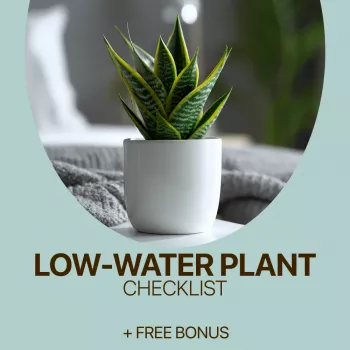
Low-Water Indoor Plants: A Simple Checklist for Minimal Watering and Easy Care
A low-water routine works best when plant choice, pot setup, and light level match. Use the checklist below to choose forgiving indoor plants, set up drainage correctly, and follow a steady “check-first, water-second” rhythm that helps prevent both drought stress and overwatering.
Quick start: the low-water plant checklist
- Choose plants with thick leaves, canes, or rhizomes (they store water and tolerate missed waterings).
- Use a pot with a drainage hole and a saucer; avoid “no-hole” pots unless used as a cachepot with an inner nursery pot.
- Pick a chunky, fast-draining mix (succulent/cactus mix or potting mix amended with perlite/bark).
- Place plants where they receive consistent light; low light often means slower drying and less frequent watering.
- Water only after checking soil moisture 1–2 inches down (or deeper for large pots).
- When watering, fully soak until water drains out; empty the saucer after 10–15 minutes.
- Track the last watering date and notes (light changes, leaf cues, seasonal shifts).
If you want a one-page version you can print or save on your phone, see Low-Water Plant Checklist | Easy Care Guide for Plants That Need Little Water.
What “low-water” actually means indoors
- Low-water plants still need occasional deep watering; the goal is longer intervals between waterings, not chronic dryness.
- Most “easy care” indoor plants prefer a dry-down cycle: water thoroughly, then let the mix dry partially before watering again.
- Intervals vary by pot size, soil type, light, temperature, and airflow—two homes can have very different schedules.
- Overwatering is usually “watering too often,” not “watering too much at one time.”
If you’re calibrating your routine, it helps to compare your approach with research-based guidance like the University of Minnesota Extension’s watering notes (Watering indoor plants) and general houseplant care from the Royal Horticultural Society (RHS houseplant guidance).
Best easy-care indoor plants that need little water
These plants are widely considered “forgiving” because they store moisture, grow steadily without constant feeding, and recover well from the occasional missed watering—assuming the pot drains and the soil isn’t kept cold and wet.
- Snake plant (Dracaena trifasciata): tolerates low light and infrequent watering; avoid soggy soil.
- ZZ plant (Zamioculcas zamiifolia): thrives on neglect; let mix dry well between waterings.
- Pothos (Epipremnum aureum): flexible in many homes; water when the top few inches dry.
- Spider plant (Chlorophytum comosum): resilient; prefers drying slightly between waterings.
- Jade plant (Crassula ovata) and many succulents: brighter light helps; water only after soil dries significantly.
- Aloe vera: bright light and fast-draining mix; avoid leaving water in the crown.
- Cast iron plant (Aspidistra elatior): slow-growing and tolerant; keep on the drier side.
Low-water indoor plant comparison
| Plant | Light preference | When to water | Common mistake to avoid |
|---|---|---|---|
| Snake plant | Low to bright indirect | When soil is dry most of the way down | Watering on a fixed weekly schedule |
| ZZ plant | Low to medium indirect | When mix dries almost completely | Keeping in a cold, wet potting mix |
| Pothos | Medium to bright indirect | When top 2–3 inches are dry | Letting it sit in water in the saucer |
| Jade (succulent) | Bright light | When soil is fully dry | Using dense potting soil without drainage |
Pot, soil, and drainage: the setup that prevents root rot
- Pick the right pot size: oversized pots stay wet longer and increase rot risk; size up gradually.
- Use a fast-draining mix: add perlite/pumice and orchid bark to improve airflow in the root zone.
- Ensure drainage: one unobstructed hole is better than decorative pebbles at the bottom (which don’t improve drainage).
- Top-dressing is optional: decorative stones can slow evaporation; monitor moisture carefully if used.
- After repotting: wait a few days before watering if roots were disturbed (especially for succulents).
A simple rule: when you’re aiming for minimal watering, the soil should be able to dry predictably. If it stays damp and cool for long stretches, adjust the mix (chunkier), the pot (smaller or better drainage), or the location (more consistent light and airflow).
A minimal-watering routine that actually works
- Use the “touch test”: insert a finger 1–2 inches into the mix; for bigger pots, check deeper with a wooden skewer.
- Watch the plant, not the calendar: leaf firmness, wrinkling, and slight droop can signal thirst; yellowing and mushy stems often signal excess moisture.
- Water deeply: pour slowly until water drains from the bottom; repeat once if the soil is very dry and hydrophobic.
- Empty the saucer: standing water can suffocate roots and attract fungus gnats.
- Adjust seasonally: many houseplants slow down in winter and need less frequent watering.
Troubleshooting: common low-water plant problems
Printable tracking: keep care simple with a one-page checklist
- Low-Water Plant Checklist | Easy Care Guide for Plants That Need Little Water
- Wear What Works Together – Color Matching Guide for Outfits, Personal Style, and Confident Everyday Dressing | Digital Download
FAQ
How often should low-water indoor plants be watered?
It depends on light, pot size, and soil mix, so the most reliable approach is to check moisture first and water only after the right dry-down. ZZ plants, snake plants, and succulents often want the mix nearly dry; pothos and spider plants usually do best when the top few inches dry before watering.
Is it better to mist low-water plants instead of watering the soil?
Misting doesn’t replace soil watering because roots still need a thorough soak occasionally. For some plants it may slightly boost humidity, but frequent misting can also encourage leaf spotting; deep watering when the mix is dry enough is the core routine.
What’s the easiest way to avoid overwatering?
Use a pot with a drainage hole, a fast-draining mix, and a simple moisture check (finger or skewer) before you water. Water deeply, then empty the saucer so roots never sit in standing water.










Leave a comment