Diagnose Car Noises: Clicks, Squeals, Knocks & Hums
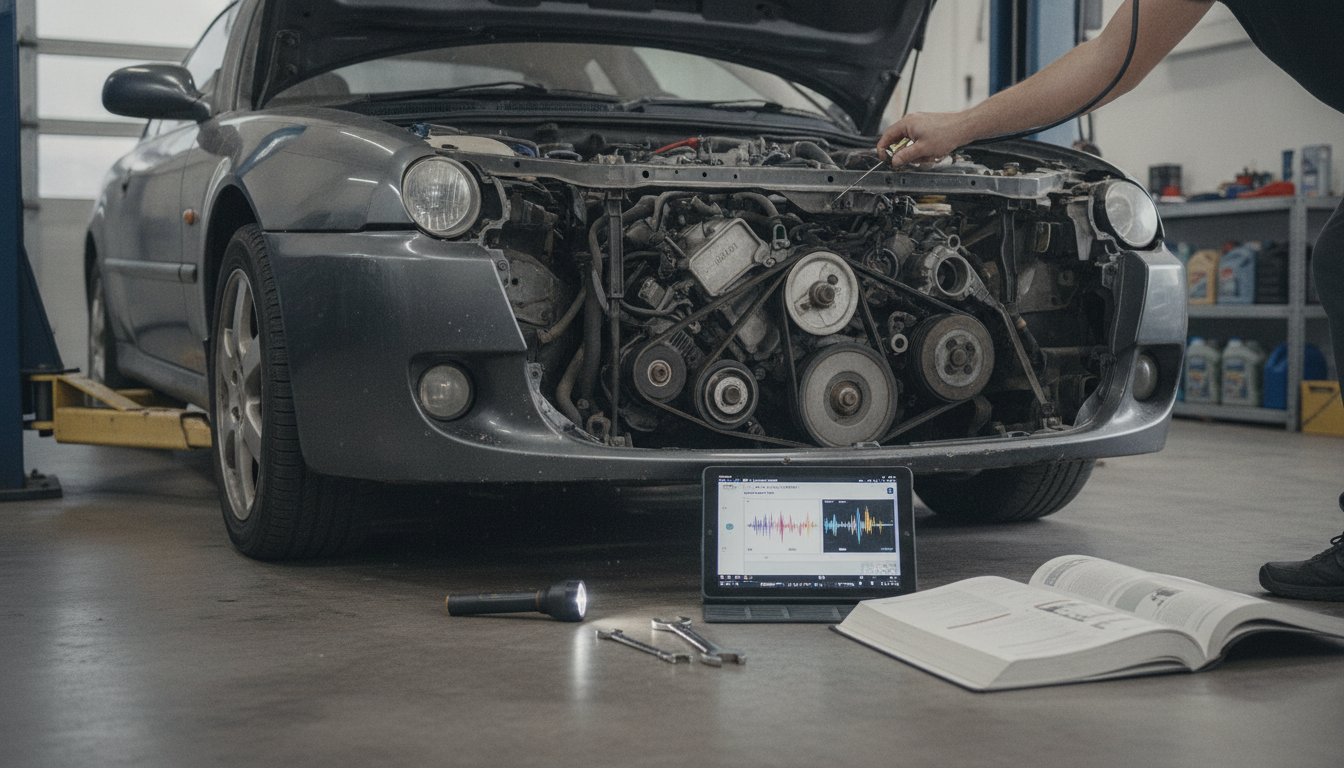
Figuring Out Your Car’s Noises: A Practical Guide to Diagnosing and Fixing Common Sounds
Clicks, squeals, knocks, hums, and rattles often show up long before a breakdown. The fastest way to protect safety and avoid expensive repairs is to match the sound to when it happens (speed, engine load, braking, turning, bumps, A/C on) and then confirm with a few simple checks. This guide organizes the most common vehicle noises by symptom, explains likely causes, highlights what’s urgent, and outlines safe next steps.
Start with a quick noise “profile”
- Note when it happens: cold start, idle, accelerating, cruising, decelerating, braking, turning, over bumps, shifting, A/C on.
- Identify location: front/rear, left/right, underhood/cabin, near a wheel, exhaust area, dash/interior.
- Describe the character: squeal (high pitch), grind (metallic), knock (deep), tick (fast/light), thump (single impact), whine (steady), hiss (air/vacuum).
- Track the pattern: changes with vehicle speed vs. engine RPM; appears only at certain temperatures or after rain.
- Capture evidence safely: record a short audio/video clip while parked or with a passenger; avoid leaning near moving/hot parts.
Quick sound-to-symptom cheat sheet
| Sound | Most likely area | Clue that helps narrow it down | How urgent |
|---|---|---|---|
| High-pitched squeal | Belts/brakes | Worse on cold start or light braking | Soon (may become unsafe) |
| Grinding | Brakes/wheel bearings | Changes while braking or cornering | Now (stop driving if severe) |
| Deep knock | Engine/internal | Changes with RPM/load; oil light risk | Now (risk of major damage) |
| Ticking | Valve train/exhaust leak | Louder cold; may fade warm | Soon (diagnose to prevent damage) |
| Humming/roaring | Tires/wheel bearings | Gets louder with speed; may change in turns | Soon (can become unsafe) |
| Clunk over bumps | Suspension/steering | Happens on potholes, braking, or turns | Soon (handling/safety) |
| Rattle | Heat shields/interior | Often at certain RPM or rough roads | Monitor to soon |
| Hissing | Vacuum/cooling | Heater behavior, idle quality, coolant smell | Varies (coolant leak can be urgent) |
Noises at startup and idle
- Brief belt squeal at cold start: Often points to belt wear, a weak tensioner, a rough idler pulley, or moisture on pulleys. Inspect the belt for glazing/cracks and listen near accessory pulleys; skip “belt dressing,” which can mask the real issue.
- Fast ticking at cold idle: Could be valve train/lifter noise, low oil level/pressure, or an exhaust manifold leak that quiets as metal warms. Check oil level and condition first, then watch for any warning lights.
- Rough idle with a hiss: Commonly a vacuum leak (cracked hose, intake gasket seep, PCV issue). Look for brittle hoses, loose clamps, and disconnected lines; a scan tool may show fuel trim problems.
- Rattle on startup then quiet: Frequently a heat shield, exhaust hanger, or loose bracket vibrating during the initial RPM flare. Inspect for missing fasteners and signs of contact.
Noises while accelerating or under load
- Ping/knock under acceleration: Possible detonation from low-octane fuel, carbon buildup, overheating, or incorrect timing/knock control issues. Verify coolant level, confirm the engine isn’t running hot, and scan for trouble codes before pushing the car hard.
- Whine that rises with RPM: Often alternator bearing noise, a power steering pump (if hydraulic), or a transmission whine. Check fluid levels (where applicable) and note whether the pitch follows RPM or only happens in certain gears.
- Turbo-like whistle without a turbo: Intake leaks (cracked ducting, loose clamps) or an exhaust leak upstream can “whistle” under load. Inspect intake tubes for splits and listen near exhaust joints for sharp puffs.
- Shudder with a clunk when taking off: Worn engine/trans mounts, CV joints, or driveline play can cause a heavy thunk. Inspect mounts for cracking/collapse and check CV boots for grease sling.
Noises at cruising speed (steady throttle)
Noises when braking
Noises when turning or over bumps
Sounds from the exhaust and underbody
Simple checks that prevent guesswork
When to stop driving and get immediate help
For safety recalls and official guidance on vehicle-related risks, visit NHTSA Vehicle Safety. For maintenance basics and inspection checklists, Car Care Council – Vehicle Maintenance is a helpful reference, and ASE explains technician certification standards.
A guided reference for faster diagnosis
If a persistent noise is hard to pin down, a structured walkthrough can save time and prevent replacing the wrong parts. Figuring Out Your Car’s Noises – The Ultimate Guide to Diagnosing & Fixing Your Car’s Sounds (eBook download) organizes common sounds into quick tests and practical next steps. If the issue turns into a dispute after purchase or repeated repair attempts, Used Car Lemon Law: Knowing Your Rights explains common consumer protections and documentation habits that help.
FAQ
How can a noise be tied to vehicle speed vs engine RPM?
In a safe area, hold a steady road speed and change gears (or use manual mode) so RPM changes while speed stays similar. If the pitch follows RPM, suspect the engine/accessories; if it follows speed, suspect tires, wheel bearings, or driveline components.
Is brake squeal always a sign the brakes are bad?
Not always—light squeal can come from moisture, dust, or certain pad materials. Persistent squeal, any vibration, pulling, or especially grinding means the brakes should be inspected and measured for pad and rotor condition.
What’s the difference between a wheel bearing hum and tire noise?
A wheel bearing hum often changes when you gently steer left or right because the load shifts from one side to the other. Tire noise is more tied to tread pattern and wear; rotating tires may move the noise to a different corner, while a failing bearing may run hot or show play at the hub.












Leave a comment