5500W Tankless Electric Water Heater: Sizing & Flow
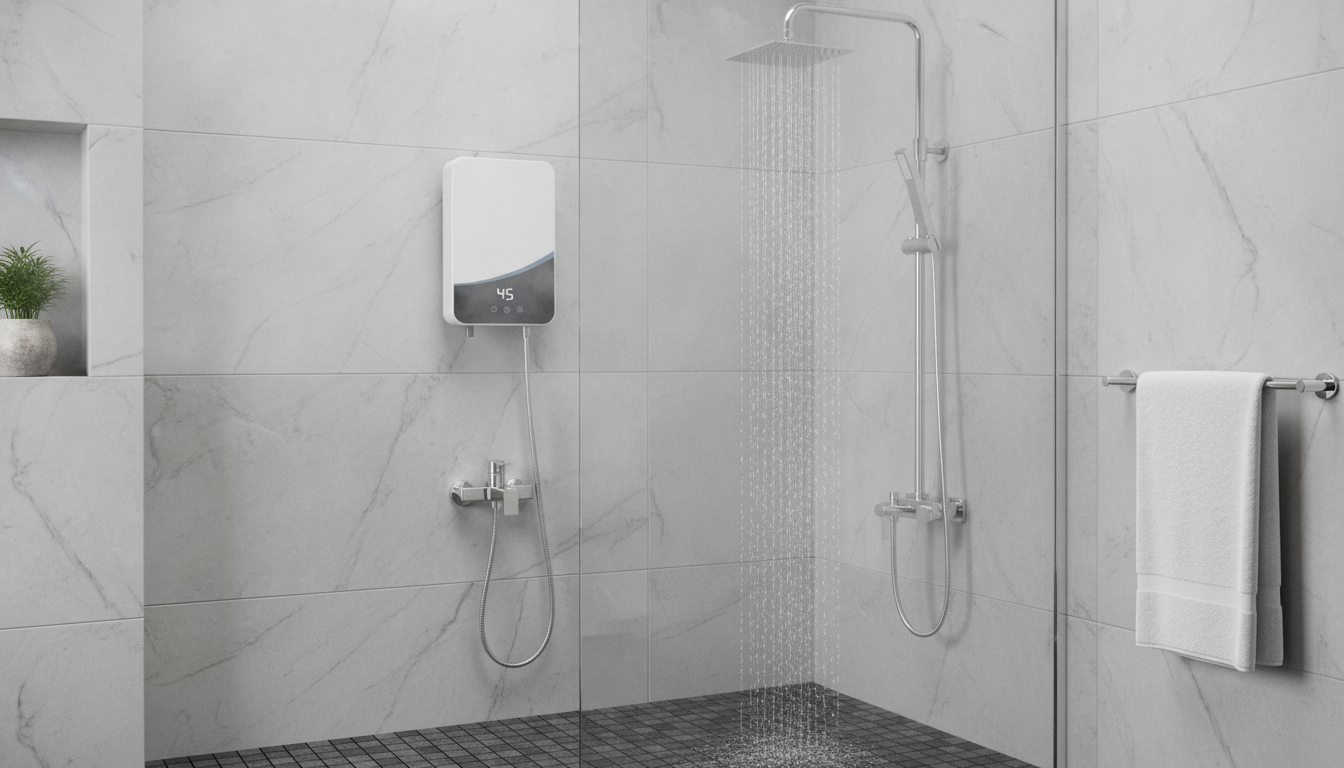
Tankless Electric Hot Water Heater 5500W: What to Expect, How to Size It, and Where It Fits Best
A 5500W tankless electric hot water heater is designed for on-demand hot water at a single sink, station, or low-flow fixture. Because it heats water only while it’s moving through the unit, real-world performance depends heavily on incoming water temperature, your electrical supply, and the outlet temperature you’re aiming for. A quick sizing reality-check up front helps avoid lukewarm surprises and makes it easier to match this wattage class to the right job.
What a 5500W tankless electric heater is best for
This size of electric tankless unit shines when it’s treated as a point-of-use solution rather than a “do everything” heater. When installed close to the fixture, it can reduce wait time and cut down on water wasted while waiting for hot water to arrive.
- Point-of-use hot water near the fixture (bathroom sink, bar sink, laundry sink, utility sink) to reduce wait time and wasted water.
- Supplemental hot water for additions, workshops, garages, RV bays, or detached spaces where long hot-water runs are inefficient.
- Low-to-moderate flow fixtures where steady warm/hot water is acceptable, rather than multiple simultaneous draws.
- Not typically ideal for whole-house use in colder climates, where higher temperature rise demands reduce available flow.
Performance basics: temperature rise and flow rate
Electric tankless heaters are limited by math: the colder the inlet water, the more energy is required to raise it to a comfortable temperature, and the lower the flow the unit can support. A practical way to set expectations is to think in “temperature rise” (outlet temperature minus incoming temperature).
For example, if groundwater is 50°F and you want 105°F at the outlet, that’s a 55°F rise. At a bathroom faucet with an aerator, that can feel great. At higher flow, the same heater may only deliver warm water—especially in winter.
| Temperature rise (°F) | Typical scenario | Approx. max flow (GPM) |
|---|---|---|
| 35°F | Mild climates / warmer inlet water | ≈ 1.1 |
| 45°F | Moderate inlet temperatures | ≈ 0.8 |
| 55°F | Cool inlet water (common in many regions) | ≈ 0.7 |
| 65°F | Cold inlet water / winter conditions | ≈ 0.6 |
If a fixture is truly low-flow (gentle handwashing, light dish rinsing), performance feels significantly stronger. To keep results consistent, use a realistic outlet setpoint and avoid constantly “chasing” the perfect mix at the faucet—rapid mixing changes the load and can lead to temperature swings.
For a deeper overview of how demand-type water heating works and why sizing matters, the U.S. Department of Energy provides a helpful primer: Tankless or Demand-Type Water Heaters.
Electrical requirements and safety checks
Before buying or installing a 5500W unit, confirm that your electrical setup can support it safely. Many 5500W models are 240V; at 240V, current draw is roughly 23 amps (actual requirements vary by model).
- Verify voltage (often 240V for 5500W units) and ensure your panel supports it.
- Plan for a dedicated circuit sized to the manufacturer’s instructions and compliant with applicable code.
- Use the correct wire gauge and breaker size, and ensure proper grounding—no extension cords and no shared circuits.
- Check local requirements for GFCI/AFCI protection where applicable, especially around sinks and wet locations.
- When in doubt, hire a licensed electrician to avoid nuisance tripping, overheating, or unsafe connections.
For code context and safety guidance, consult the National Electrical Code via NFPA resources: NFPA — NEC (NFPA 70).
Installation and placement: making it work like it should
Placement is everything for point-of-use tankless. The closer the unit is to the faucet or station, the more it feels like “instant hot water,” and the less heat you lose in piping.
Everyday use: dialing in comfort and efficiency
Using efficient fixtures can also help overall hot-water satisfaction. EPA’s WaterSense program is a good reference point when shopping for water-saving faucets and showerheads: U.S. EPA — WaterSense.
Maintenance and troubleshooting that prevents most problems
Product spotlight: Tankless Electric Hot Water Heater 5500W
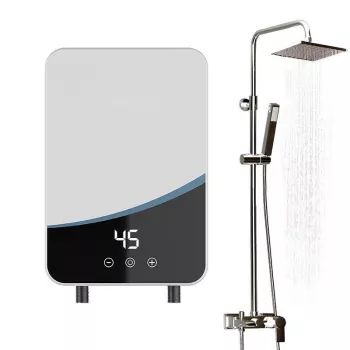
If the goal is fast hot water at a single sink without the bulk of a storage tank, Tankless Electric Hot Water Heater 5500W is a compact on-demand option that fits point-of-use installs where a full-size heater isn’t practical. It’s best matched to one fixture at a time, especially when paired with a low-flow faucet aerator for improved perceived performance in cooler seasons.
Quick checklist before ordering
| Item to confirm | Why it matters |
|---|---|
| Voltage and breaker capacity | Ensures safe operation without tripping or overheating wiring |
| Incoming water temperature range | Determines realistic flow rate at target outlet temperature |
| Distance to fixture | Closer placement reduces wait time and wasted water |
| Water hardness | Hard water may require more frequent descaling |
More in-stock picks
- Elegant V-Neck Short Winter Coat for Women
- Wear What Works Together – Color Matching Guide for Outfits, Personal Style, and Confident Everyday Dressing | Digital Download
FAQ
Can a 5500W tankless electric unit run a shower?
Sometimes, but it’s usually limited to warm inlet-water conditions or a very low-flow showerhead. In colder seasons, the required temperature rise can push flow low enough that the shower may feel only warm rather than truly hot.
Does a tankless electric heater need a dedicated circuit?
Yes in most installations. A 5500W unit can draw around the low-to-mid 20-amp range at 240V, so it typically requires a dedicated circuit with breaker and wire sized per the manufacturer’s instructions and applicable electrical code.
How often should it be descaled?
It depends on water hardness and how often the heater runs—anywhere from every few months in very hard water to about once a year in softer water. If you notice reduced temperature, reduced flow, or more frequent overheating behavior, descaling sooner is often warranted.









Leave a comment