Smart Cat Play: Interactive Games & DIY Enrichment
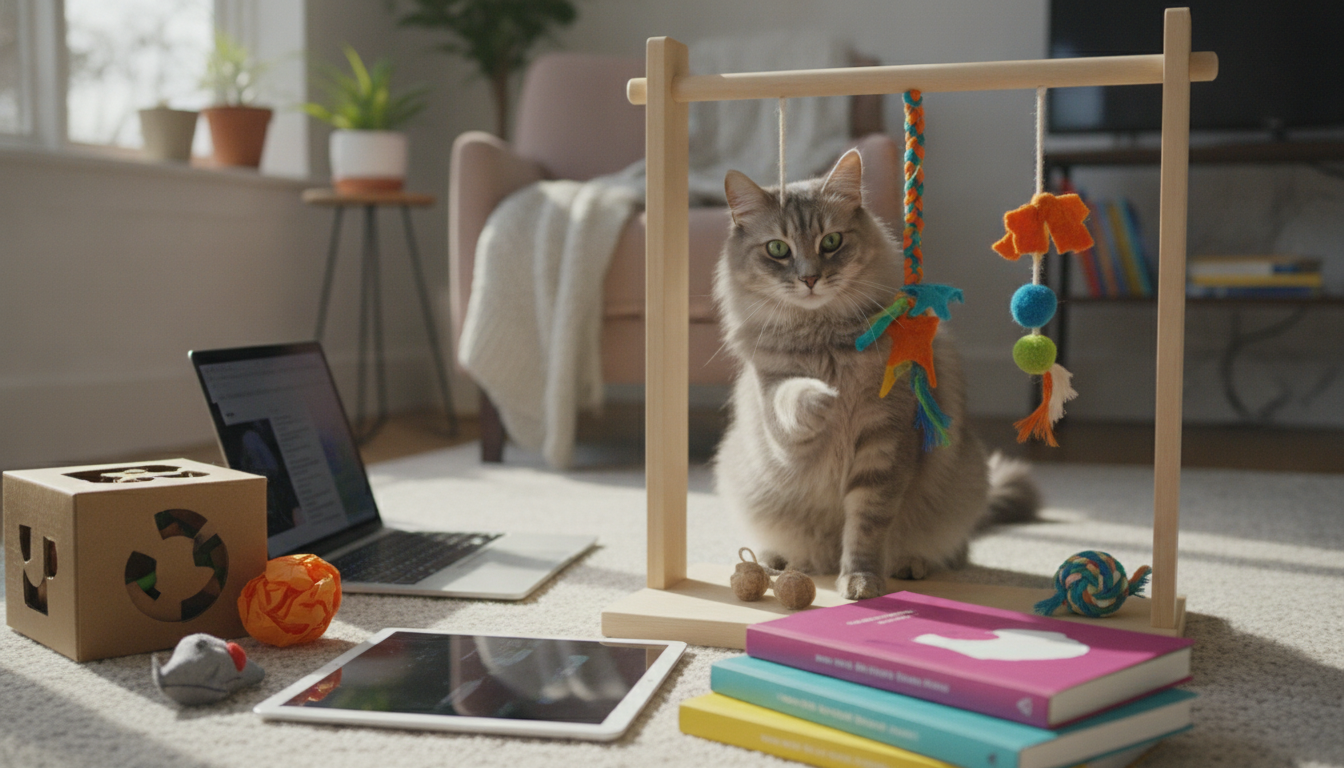
Creative Interactive Games for Your Cat: Smart Play, Enrichment, and DIY Fun
Interactive play supports a cat’s instincts to stalk, chase, pounce, and “capture,” while also reducing boredom-related behaviors. The right mix of short, engaging games and simple at-home enrichment can help indoor cats burn energy, build confidence, and strengthen the bond with their humans—without needing expensive gear.
Why interactive play matters for cats
Cats are wired for the hunt. When that sequence doesn’t have an outlet, energy and frustration often leak out in ways that look “random” to humans—but make perfect sense to a bored predator.
- Channels natural hunting sequences (search → stalk → chase → pounce → grab) in a safe, structured way.
- Helps prevent boredom, stress, and frustration that can show up as nighttime zoomies, scratching, or attention-seeking behaviors.
- Supports healthy weight management by adding movement to daily routines, especially for indoor cats.
- Improves confidence for shy cats when games start easy and gradually become more challenging.
- Strengthens the relationship by making humans part of the “hunt,” not just providers of food.
For deeper enrichment guidance, the Indoor Pet Initiative and the ASPCA cat enrichment resources both emphasize variety, predictability, and safe outlets for natural behaviors.
Set up a “smart play” routine that cats actually stick with
Most cats do best with short sessions that end on a win. Think “mini hunts” rather than a marathon workout.
- Aim for 2–4 short sessions per day (5–10 minutes) instead of one long session that ends in frustration.
- Use the hunt pattern: start slow, build speed, include hiding/peeking, and finish with a “catch” moment.
- End with a small meal or a few treats to complete the cycle and reduce post-play agitation.
- Rotate toys and game styles every few days to keep novelty high without constantly buying new items.
- Match timing to energy peaks (often morning and evening), and schedule play before quiet times like bedtime.
A useful “rule of thumb” is to stop while your cat is still engaged. Leaving them eager for the next round builds consistency—and makes tomorrow’s session easier to start.
Interactive games to try (with quick variations)
These games are designed to be fast to set up, easy to repeat, and flexible enough to scale up or down depending on your cat’s age and confidence.
- Wand “prey” chase: Keep the lure low, mimic darting prey, and include pauses behind furniture for stalking.
- Treat trail scavenger: Create a short path of kibble/treats with one “jackpot” at the end under a cup or in a paper ball.
- Box ambush: Cut safe peek holes in a cardboard box and move a toy outside so the cat can swat from cover.
- Sock-skitter sprint: Roll a tightly balled sock across a hallway; switch directions to trigger quick turns.
- Towel tunnel: Drape a towel over two chair legs to form a tunnel; drag a lure just out of sight.
- Staircase toss: Toss a soft toy up one step at a time; let the cat ‘retrieve’ or pounce on each landing.
- Target training mini-game: Teach “touch” to a spoon or target stick, then use it to guide jumps, sits, or stationing on a mat.
Game ideas by energy level and setup time
| Game | Best for | Setup | How to level up |
|---|---|---|---|
| Wand prey chase | High-energy cats | 30 seconds | Add obstacle routes and longer stalk pauses |
| Treat trail scavenger | Food-motivated cats | 2 minutes | Increase hiding spots; reduce visible treats |
| Box ambush | Shy or cautious cats | 5 minutes | Move the toy slower; vary hole positions |
| Towel tunnel | Kittens and playful adults | 2 minutes | Add crinkle paper; change tunnel shape |
| Target training | Cats that like structure | 3 minutes | Add new “stations” and short sequences |
DIY enrichment toys from common household items
DIY enrichment works best when it’s quick to assemble and easy to retire when worn out. If an item starts shedding bits, gets sharp edges, or develops loose threads, toss it and rebuild.
Adjusting games for kittens, seniors, and multi-cat homes
Safety and common play mistakes to avoid
A simple 7-day play plan to build the habit
When a guide helps: building variety without guesswork
For a ready-to-use library of interactive play ideas, the Creative Interactive Games for Your Cat ebook is a simple way to keep your routine fresh without overthinking each session.
More in-stock digital finds
- Wear What Works Together – Color Matching Guide for Outfits
- Used Car Lemon Law: Knowing Your Rights – A Comprehensive Guide for Consumers
FAQ
How long should interactive play sessions be for a cat?
Most cats do best with 5–10 minute sessions, 2–4 times per day. Adjust for age and fitness, stop before overstimulation, and end with a small snack or a few treats.
What are safe DIY toys for cats using household items?
Good options include paper balls, cardboard roll treat puzzles, egg carton snack boards, and box or towel tunnels. Supervise play, avoid strings, and check items for sharp edges or small pieces that could come off.
Why does my cat lose interest in toys so quickly?
Cats often disengage when movement doesn’t look like “prey,” sessions run too long, or the same toy is always available. Rotate toys, vary speed and hiding, keep play short, and time sessions around your cat’s natural energy peaks.










Leave a comment